
Great news for those who rely on qualified healthcare spending accounts like HSAs and FSAs, to help with healthcare and dependent daycare expenses! The recently passed H.R.1, 2025 reconciliation bill, otherwise referred to as the “The One Big Beautiful Bill Act”, contains important enhancements affecting both HSAs and FSAs. Importantly, these expansions take affect beginning in 2026, providing plenty of time for affected individuals to plan accordingly for 2026 open enrollment. Here’s what the bill changed for both Health Savings Accounts (HSA) and Flexible Spending Accounts (FSA) –

The Consolidated Appropriations Act (CAA) of 2021 includes a provision known as Prescription Drug Data Collection, or RxDC. Each year, insurance companies and employers are required to remit data to the U.S. Departments of Health and Human Services, Labor, and Treasury pertaining to certain aspects of their health insurance offering

After ten long years of the Affordable Care Act’s (ACA) so called employer shared responsibility (aka employer mandate) reporting requirements, we finally have some relief! The former President signed two bills on December 23, 2024, that significantly ease the burden associated with this particular aspect of ACA compliance – the Paperwork Burden Reduction Act and the Employer Reporting Improvement Act. Here’s what the ACA’s ALE’s (Applicable Large Employer) need to know and do, to benefit from the relief provided by these two bills…

This fall, the annual Medicare open enrollment season could look considerably different than in previous years. That’s because of the Inflation Reduction Act’s (IRA) new, $2,000 cap on out of pocket costs associated with prescription drugs covered by Medicare Part D. While the out of pocket cap reduction (down from $3,300 in 2024) sounds good on the surface, speculation is that Medicare Part D health insurers will look for ways to offset the benefit upgrade. Here’s what to look for in the coming weeks –

Changing health insurance providers can provide premium cost relief, but can also present challenges related to prescription drug coverage. Each health insurance plan generally contracts with a pharmacy benefit manager (PBM) to facilitate prescription drug coverage. When a change in health insurance coverage occurs, this usually means a change to the PBM, and correspondingly, how your prescription drugs are covered, or not. Here are some tips to help navigate a change in health insurance and PBM –

Employers that employ both EXEMPT and NON-EXEMPT employees need to be aware of a recent U.S. Department of Labor (DOL) rule, published on April 26, 2024. The rule increases the salary threshold that establishes who is exempt from minimum wage and overtime protections that apply to non-exempt employees, under the Fair Labor Standards Act (FLSA). LEARN MORE

Employers once again face a rather expensive healthcare conundrum. The prevalence of so called “GLP-1 drugs”, prescribed ostensibly for weight loss, is causing many to question the cost versus benefit aspect of these drugs. GLP-1 drugs are showing promise at delivering on the goal of weight loss, but they have not been around long enough to evaluate their long term side effects. And while demand for these drugs is definitely on the rise, they come at a very high price point.

The Consolidated Appropriations Act (CAA) requires an annual “gag clause prohibition compliance attestation” (GCPCA) be submitted by Dec. 31, 2023, and annually hereafter. Importantly, carriers/administrators/payers have largely removed any references to gag clauses and prohibitions of sharing pricing and quality data, which was prohibited by the CAA.
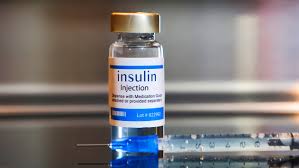
After a six year legal battle, drug maker Eli Lilly has agreed to a settlement valued at up to $500 million. Relatively recently, Congress has taken a keen interest in some of the practices of both manufacturers of prescription drugs, and so called pharmacy benefit managers (PBMs). Eli Lilly is one of the nation’s oldest manufacturers of prescription drugs, and is largely identified by its introduction of Prozac to market in 1988. Here are the details of the settlement, which benefits virtually anyone who was prescribed insulin made by Eli Lilly from January 1, 2009 to the date of the settlements final approval –

The Affordable Care Act’s (ACA) preventive care mandate has been partially struck down by a federal district judge. On March 30, 2023 the ruling made portions of the preventive care benefit unconstitutional nationwide. The U.S. Department of Justice has appealed the decision, so there is likely more to come out of this ruling.


