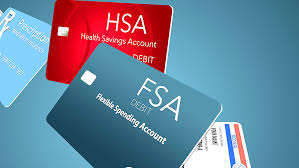
Great news for those who rely on qualified healthcare spending accounts like HSAs and FSAs, to help with healthcare and dependent daycare expenses! The recently passed H.R.1, 2025 reconciliation bill, otherwise referred to as the “The One Big Beautiful Bill Act”, contains important enhancements affecting both HSAs and FSAs. Importantly, these expansions take affect beginning in 2026, providing plenty of time for affected individuals to plan accordingly for 2026 open enrollment. Here’s what the bill changed for both Health Savings Accounts (HSA) and Flexible Spending Accounts (FSA) –
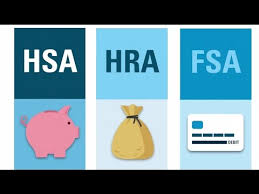
In light of the Coronavirus pandemic, Congress, the Office of Personnel Management (OPM), and the IRS have made key changes affecting the use of tax-free funds that reside in tax preferred spending accounts:
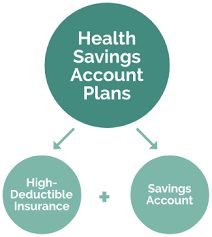
Here are the maximum limits for Health Savings Accounts (HSA) and the required (qualified) High Deductible Health Plans (HDHP) for 2020…
Both the pace and scope of changes in the healthcare/health insurance space accelerated this past week (7/15/19-7/19/19) with several important developments. Here’s a recap of what all took place…

The “consumerization” of healthcare continues with the advent of a relatively new concept – prepaid healthcare! A company called – MDsave – is making headlines with their prepaid voucher concept for healthcare, which strongly resembles travel sites like Orbitz, Kayak, Expedia, and Travelocity.

Since the arrival of high deductible health insurance plans (HDHP) coupled with tax preferred spending accounts (SA) on to the employee benefits scene nearly 22 years ago, a number of “best practices” have emerged to assist employers and brokers/consultants in deploying them. These types of plans, often referred to as “consumer driven health” plans…or CDH, have five (5) specific employer best practices I have developed for successful introduction/open enrollment of such plans.
Last month (May, 2018) the IRS issued its anticipated 2019 calendar year, inflation adjusted figures affecting Health Savings Accounts (HSAs), and the associated/required qualified High Deductible Health Plans (HDHPs). Changed figures for 2019 are indicated in red in the chart that follows; along with the current (2018) and prior (2017) year’s limits. 2017 2018LEARN MORE

As the old saying goes – “the more things change…the more they remain the same”! A little more than a month ago, we shared the news that the IRS had reduced the previously announced, 2018 family Health Savings Account (HSA) contribution limit by $50 (from $6,900 to $6,850).See – https://smstevensandassociates.com/irs-updates-2018-hsa-family-contribution-amount/ This “middle of the game” changeLEARN MORE

On March 5, 2018, the IRS issued a bulletin which contained, among other things, revised cost of living adjustments (COLAs) for 2018. The previously passed tax reform law (i.e., Tax Cuts and Jobs Act) created the need for the revised COLAs, which have a direct impact in the employee benefits world affecting Health Savings AccountsLEARN MORE
Recently the IRS issued it’s anticipated Health Savings Account (HSA) guidance for calendar year 2018. Listed below are the changes to current IRS rules affecting HSAs, and qualified high deductible health insurance plans, effective in 2018: HSA Contribution Maximum (Individual/Self Only Coverage): $3,450 ($3,400 in ’17). HSA Contribution Maximum (Family Coverage): $6,900 ($6,750 in ’17).LEARN MORE


