
The recently signed (1/22/2018) “short-term spending bill”, also referred to as the “continuing resolution” (CR) does more than keep the United States government open and fully functioning until February 8, 2018. It also delivers yet another set of Affordable Care Act (ACA) delays. Employers offering group health insurance to their employees can breathe a collectiveLEARN MORE

An important and often overlooked benefit of the Affordable Care Act (ACA) is full coverage and benefits for preventive care. Specifically, the ACA established that virtually all private health plans must provide 100% coverage (i.e., no cost share) for a host of preventive healthcare services. The only exception to this requirement are so called “grandfathered”LEARN MORE

In order to accomplish its objective of “affordable health insurance coverage”, the Affordable Care Act (ACA) created three (3) separate, cost reducing initiatives: 1. Premium Tax Credits – reduce out of pocket PREMIUM costs; 2. Cost Sharing Reductions (CSR) – reduce point of service out of pocket costs such as copays, deductibles, and coinsurance; andLEARN MORE

This particular blog post is primarily directed to residents of my adopted home state of Nebraska. However it may shed light on some of the “when’s, who’s and what’s” that health care/insurance stakeholders may be facing in other parts of the country next year. As we inch closer to the 2018 individual health insurance openLEARN MORE

Those of you who read my previously released – “7-Point Health Care/Insurance Reform Plan” – may recall point no. 2, which was to entice and encourage insurers to come back to the markets and resume offering affordable coverage to willing, able, and ready buyers. (See – https://smstevensandassociates.com/my-7-point-health-care-insurance-reform-plan/) Several folks that read the blog outlining myLEARN MORE

Ordinarily, this Blog site is used to provide information, ideas, strategies, explanations; in short – clarity – for health care/insurance stakeholders. Today I’m departing from the usual fact based format to provide my thoughts and opinions on what would be a good way forward with respect to REAL healthcare/health insurance reform. These ideas are basedLEARN MORE

Recently the IRS issued it’s anticipated Health Savings Account (HSA) guidance for calendar year 2018. Listed below are the changes to current IRS rules affecting HSAs, and qualified high deductible health insurance plans, effective in 2018: HSA Contribution Maximum (Individual/Self Only Coverage): $3,450 ($3,400 in ’17). HSA Contribution Maximum (Family Coverage): $6,900 ($6,750 in ’17).LEARN MORE

On May 4, 2017, the U.S. House of Representatives passed an amended version of the “American Health Care Act” or AHCA, on a 217-213 vote tally. In and of itself, this vote DOES NOT ALTER THE HEALTHCARE/HEALTH INSURANCE LANDSCAPE! There are a number of phases (at least 3, but likely several more procedural steps) that must be completed in order for the Affordable Care Act (ACA) to be partially repealed. And to be clear, the AHCA would represent a partial, piecemeal repeal of the ACA, and would in fact, retain much of the ACA. So here’s where we are and what we know, as of today…

Patient Centered Outcomes Research Institute (PCORI) Fee, also known as the Comparative Effectiveness Research Fee (CERF)Fee periods and payment schedule For CERF payments, ERISA plan year is important, and determines both the timing and amount of payment to the IRS. If your ERISA plan year and renewal date differ, the ERISA plan year should be usedLEARN MORE
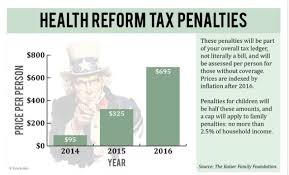
The Affordable Care Act’s (ACA) “health insurance mandates” are still in effect, and have most definitely not been abolished. Had the Republican party’s – The American Health Care Act (AHCA) – passed, it would have, among other things, retroactively eliminated both the Individual and Employer mandates. As such, it did not go to aLEARN MORE


